Want to reduce fuel costs for fleet operations in 2026? As fuel prices fluctuate and regulations tighten, fleet managers can cut expenses by 10-30% using smart, data-driven strategies.
As Lama Group, your trusted partner in fuel management, wholesale distribution, and retail solutions, we understand the pressures fleet operators face in 2026. With fuel prices stabilizing after recent volatility but still subject to global fluctuations averaging around $3.60 per gallon nationally fuel remains a top expense, often comprising 15-30% of operational costs. The good news? Advances in telematics, sustainable practices, and data driven strategies can slash these costs by 10-30%, boosting profitability and sustainability. In this guide, we’ll explore proven, actionable tactics tailored for 2026’s landscape, including electrification trends and AI-optimized routing.
Why Fuel Cost Reduction Matters More in 2026
The fleet industry is evolving rapidly. Lower freight rates and softer used vehicle prices offer breathing room, but rising regulatory demands for emissions reductions and the push toward electrification mean fleets must adapt or risk higher long-term expenses. Data from recent reports shows that fleets adopting proactive measures like telematics can save upwards of $10,000 annually per vehicle through efficiency gains. Whether you’re managing delivery vans, heavy-duty trucks, or mixed fleets, these strategies focus on immediate wins while preparing for a greener future.
10 Proven Strategies to Cut Fuel Costs
Here are evidence-based approaches, drawn from industry experts and 2026 trends. Implementing a combination can yield compounding savings aim for a 5-10% initial reduction to directly impact your bottom line.
1. Leverage Telematics for Real-Time Monitoring and Insights
Telematics systems provide visibility into fuel consumption, idling, and inefficiencies, potentially reducing costs by 15-30%. In 2026, AI-enhanced platforms analyze patterns to predict and prevent waste. Integrate with fuel cards for fraud detection and automated alerts.
2. Optimize Routes with Advanced Planning Tools
Poor routing adds unnecessary miles and idle time. Use GPS and AI for dynamic rerouting based on traffic, weather, and real-time data, cutting fuel use by 10-20%. Tools like these save thousands of gallons annually by minimizing delays.
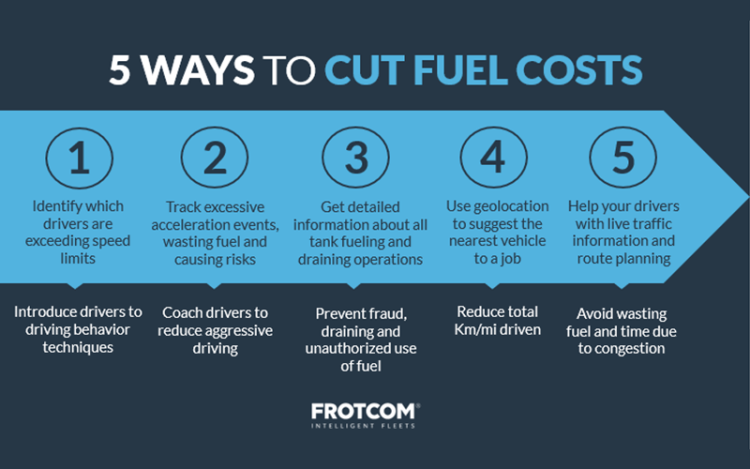
Reduce costs with Frotcom’s Fuel Management – Frotcom
3. Train Drivers and Monitor Behavior
Aggressive driving, speeding, and excessive idling waste up to 30% more fuel. Implement eco-driving programs with scorecards and incentives, reducing consumption by 5-15%. In 2026, gamified apps make training engaging and effective.
4. Prioritize Preventive Maintenance
Under-inflated tires alone drop efficiency by 3%, while neglected engines compound issues. Schedule regular checks for tires, filters, and alignments using predictive analytics to avoid breakdowns and extend vehicle life.
5. Use Fuel Cards and Wholesale Purchasing
Fuel cards offer rebates (up to 6¢ per gallon) and detailed tracking, simplifying expense management. Buy wholesale for bulk discounts and store on-site for predictable pricing, ideal for larger fleets.
6. Reduce Idling and Vehicle Weight
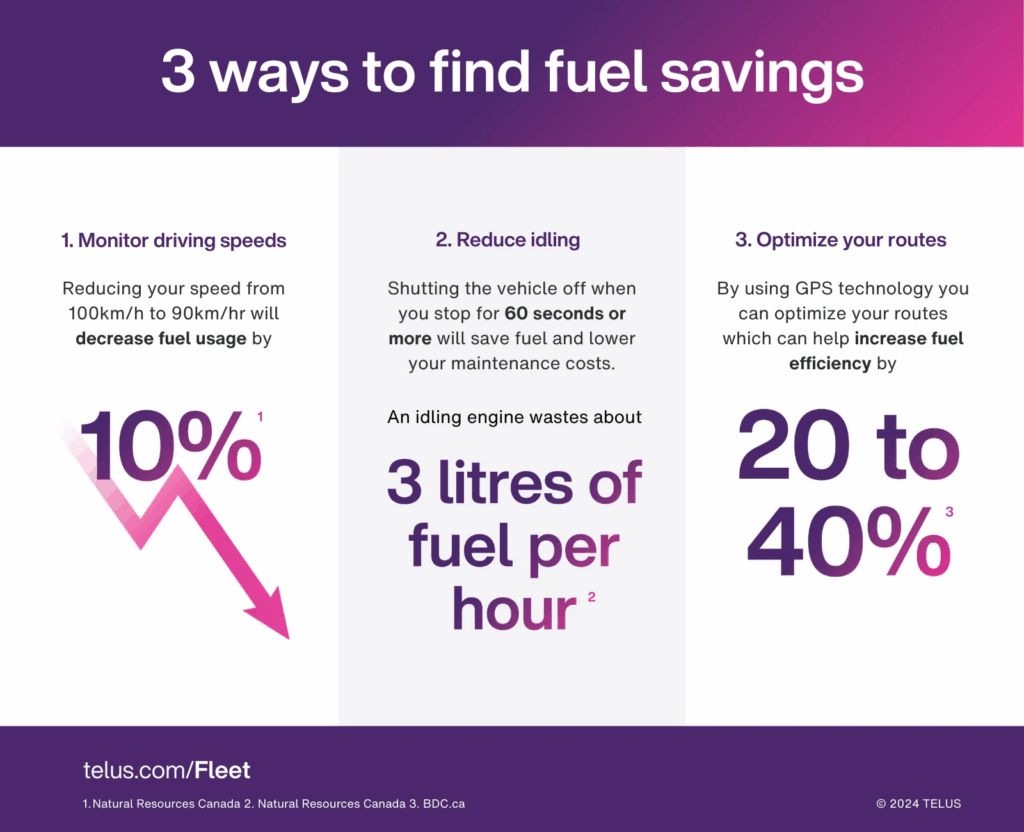
Idling burns about 1 gallon per hour in trucks—enforce policies with auto-shutoff tech to cut this by half. Lighten loads by 10% for 6-7% better economy; right-size your fleet to avoid oversized vehicles.
Unlocking fuel savings with fleet tracking systems
7. Adopt Alternative Fuels and Electrification
Transition to biofuels, hybrids, or EVs for lower long-term costs and emissions compliance. In 2026, incentives make EVs viable, with reduced maintenance offsetting initial investments.
8. Implement Data Analytics for Continuous Improvement
Track metrics like MPG and cost per mile with software for trend analysis. Monthly reviews can uncover hidden savings, turning data into dollars.
9. Fuel in-Network and Maximize Rebates
Stick to partnered stations for discounts and rebates, compounding savings over high-volume purchases. For a 100,000-mile fleet, this could return $9,000+ annually.
10. Explore Fuel Risk Management
Hedge against price spikes with forward contracts or analytics to leverage regional variations. This stabilizes budgets in volatile markets.
Strategy
Potential Savings
Implementation Ease
2026 Relevance
Telematics Monitoring
15-30%
Medium (Tech Investment)
High (AI Integration)
Route Optimization
10-20%
High (Software Tools)
High (Real-Time Data)
Driver Training
5-15%
High (Programs/Incentives)
Medium (Ongoing)
Preventive Maintenance
3-10%
High (Schedules)
High (Predictive Tech)
Fuel Cards/Wholesale
Up to 6¢/gallon
High (Partnerships)
High (Rebates)
Reduce Idling/Weight
5-10%
Medium (Policies/Tech)
Medium
Alternative Fuels/EVs
20-50% Long-Term
Low (Transition)
Very High (Regulations)
Data Analytics
5-15%
Medium (Software)
High (Trends)
Measuring Success and Next Steps
Track ROI with key metrics: fuel spend per mile, idle time reduction, and overall efficiency gains. Start small—pilot telematics on 20% of your fleet—and scale based on results. In 2026, fleets that combine these strategies not only cut costs but also lower emissions, aligning with global sustainability goals.
At Lama Group, we offer customized fuel management solutions, from wholesale partnerships to consulting on telematics integration. Contact us today to audit your fleet and unlock savings—let’s drive your operations forward efficiently!
Investing in a gas station is one of the most popular entry points into the U.S. retail fuel and convenience store industry. In Texas, where car culture and highway travel dominate, gas stations can be highly profitable real estate and business investments.
But like any business, there are risks and challenges. Understanding the pros and cons of owning a gas station in Texas will help entrepreneurs decide if this opportunity aligns with their goals.
At Lama Group, we guide investors through every stage—site selection, financing, construction, branding, and operations—to maximize success.
1. Why Entrepreneurs Consider Gas Station Investments
High consumer demand: Fuel is essential, ensuring consistent traffic.
C-store expansion opportunities: Convenience sales often exceed fuel margins.
Multiple revenue streams: Fuel, foodservice, car washes, EV charging.
Scalable model: Owners can grow from one site to a multi-location portfolio.
One of the most critical choices for any gas station owner in Texas is deciding between branded vs. unbranded fuel supply. The decision affects everything from profit margins to customer loyalty, marketing support, and even financing opportunities.
At Lama Group, we help station owners evaluate both options and connect them with reliable wholesale fuel distributors in Texas. Here’s a breakdown of the pros and cons so you can make a confident, profitable decision.
What Is Branded Fuel?
Branded fuel comes from major oil companies like Shell, Valero, Chevron, or ExxonMobil. When you operate under their flag, you sell fuel under their brand name, signage, and strict quality standards.
Benefits of Branded Gas:
Instant brand recognition: Drivers trust big names. Shell or Valero signage can increase traffic from loyal customers.
Marketing power: National advertising campaigns boost awareness and credibility.
Financing opportunities: Lenders often see branded sites as lower risk.
Fuel quality assurance: Branded programs typically guarantee additive packages and consistent quality.
Challenges of Branded Gas:
Higher wholesale prices: Branded contracts often lock you into paying more per gallon.
Contract restrictions: Long-term commitments (10–15 years) with brand-specific rules on operations.
Limited flexibility: You may have less freedom to set pricing or choose suppliers.
What Is Unbranded Fuel?
Unbranded fuel comes from independent refineries or suppliers without a major oil company’s marketing program. Many successful independent gas stations in Texas rely on this model.
Benefits of Unbranded Fuel:
Lower wholesale costs: Higher potential margins per gallon.
Pricing flexibility: Freedom to adjust retail prices based on local competition.
No long-term brand contracts: Greater control of operations and business strategy.
Creative freedom: You can build your own c-store brand identity without strict brand guidelines.
Challenges of Unbranded Fuel:
No national marketing: You rely entirely on your own promotions and reputation.
Customer perception: Some drivers believe branded fuel equals higher quality.
Financing hurdles: Lenders may view unbranded sites as higher risk.
Branded vs. Unbranded: Which Is Right for You?
The decision depends on your location, competition, and business strategy:
High-traffic, competitive markets: Branded gas may help you stand out and attract brand-loyal customers.
Price-sensitive, rural, or developing areas: Unbranded gas can yield higher margins and flexibility.
📊 Lama Group Insight: Many owners find success in hybrid strategies, such as starting unbranded to maximize margins, then rebranding when traffic or financing requires added credibility.
How Lama Group Helps Texas Gas Station Owners
At Lama Group, we understand that fuel supply is more than a transaction—it’s a business-defining decision. Whether you’re leaning branded or unbranded, we provide:
Access to top wholesale fuel distributors in Texas
Consulting on contract negotiations and market positioning
Supply chain reliability to keep your pumps full and business running
Support with c-store development to maximize total site profitability.
Investing in a gas station or convenience store is only as smart as the land it sits on. In Texas—a state known for sprawling highways and high vehicle dependency—site selection can make or break profitability. Choosing the wrong corner can lead to low sales, while the right location can deliver strong fuel volumes, high in-store revenue, and long-term growth.
At Lama Group, we help investors and developers identify winning gas station locations using traffic studies, demographic analysis, zoning expertise, and real estate insights. Here are the five key factors you must evaluate before purchasing or developing a gas station in Texas.
1. Traffic Count for Gas Station Success
Traffic isn’t just about numbers—it’s about patterns. The most profitable sites sit on high-volume roads where drivers naturally need to stop.
Peak traffic times: Look for commuter routes with steady morning and evening flow.
Direction of travel: Right-hand access often outperforms left-turn dependent sites.
Visibility: A clear line of sight from at least 500 feet can significantly increase impulse stops.
📊 Pro Tip: At Lama Group, we use DOT traffic data and proprietary analytics to project fuel volume potential before recommending a site.
2. Demographic Analysis & Local Demand
Not every busy road equals profit. You need to know who’s driving by and who lives nearby.
Population density: Locations with 2,000–3,000+ residents within a one-mile radius often outperform rural-only stations.
Income levels: Higher income areas spend more on premium fuel and c-store products.
Commuter profiles: Blue-collar commuter corridors can drive high fuel sales, while suburban families may push c-store purchases.
✔️ Lama Insight: We map demographics against retail gaps to find underserved areas—ensuring our clients don’t just buy land, but buy opportunity.
3. Competition & Market Saturation
A profitable gas station location balances demand vs. supply. Too much competition nearby can squeeze margins, but too little may signal low demand.
Competitor brands: National brands nearby may draw loyal customers, but they also prove demand exists.
Station density: A three-mile competitive radius is ideal for evaluating supply and demand.
Differentiation: Sites near fast-food, car washes, or EV charging hubs can attract additional revenue streams.
📈 Lama Group provides market saturation reports so investors can make data-backed decisions before closing on a property.
4. Zoning & Regulatory Approval in Texas
Even the perfect corner is useless without proper zoning. Texas has relatively business-friendly regulations, but each county and city has unique rules.
Fuel storage & environmental restrictions
Proximity rules for schools or residential areas
Signage height and visibility limitations
⚖️ Lama Group Advantage: We work directly with municipalities to handle zoning, permits, and compliance—ensuring projects move forward without costly surprises.
5. Growth Potential & Future Infrastructure
Think 10 years ahead. A location that looks average today may become a high-volume site tomorrow if infrastructure expands.
Planned highways or road expansions
Upcoming residential developments
Commercial zones under construction
🚀 Lama Group tracks Texas DOT and city planning projects to help clients invest in sites that appreciate—not depreciate—over time.
Why Choose Lama Group for C-Store Real Estate in Texas?
At Lama Group, we don’t just help clients buy land—we guide them in acquiring profitable gas station locations backed by data, demographics, and due diligence.
From site acquisition and traffic studies to zoning and development consulting, we position our clients for long-term success in Texas’ competitive fuel and convenience market.
👉 Ready to find your next winning gas station location? [Contact Lama Group today] and let our experts guide you.
Texas represents one of the most lucrative fuel retail markets in the United States, with over 30 million residents and a thriving economy that drives consistent fuel demand. Whether you’re an experienced operator looking to expand or a first-time investor entering the fuel retail industry, buying a gas station in Texas offers exceptional opportunities for long-term profitability. However, navigating the complexities of gas station acquisition requires careful planning, thorough due diligence, and expert guidance to avoid costly mistakes that can derail your investment.
This comprehensive guide walks you through every step of the gas station acquisition process in Texas, from defining your investment goals to successfully closing your deal and transitioning operations.
Why Buy a Gas Station in Texas?
Market Demand and Economic Growth
Texas boasts the second-largest population in the United States, with continued growth projected through 2030. The state’s diverse economy, anchored by energy, technology, and manufacturing sectors, creates sustained demand for fuel and convenience retail services. Major metropolitan areas like Houston, Dallas-Fort Worth, Austin, and San Antonio continue expanding, driving increased vehicle miles traveled and fuel consumption.
The Texas fuel retail market generates over $40 billion annually, with convenience store sales adding another $15 billion in revenue. This robust market foundation provides gas station owners with multiple revenue streams and recession-resistant cash flow potential.
Strategic Advantages for Operators
Texas offers several unique advantages for gas station investors:
Growing population: Consistent demand growth across urban and suburban markets
No state income tax: Maximizes after-tax returns for business owners
Business-friendly regulations: Streamlined permitting and operational requirements
Diverse demographics: Appeals to various customer segments and product mixes
Strategic location: Central U.S. position benefits fuel supply logistics.
Step 1 – Define Your Investment Goals
Owner-Operator vs. Absentee Investment Strategy
Before beginning your search, determine whether you plan to actively manage the operation or hire management. Owner-operators typically achieve higher profitability through direct oversight and customer service excellence, while absentee investors focus on locations with proven management teams and streamlined operations.
Owner-operated stations in Texas average 15-20% higher net margins due to reduced labor costs and improved operational efficiency. However, absentee investments offer portfolio scalability and reduced time commitment for investors with multiple business interests.
Income Targets and Return Expectations
Establish realistic financial expectations based on current Texas market conditions:
Seller’s Discretionary Earnings (SDE): $150,000-$400,000 annually for typical stations
Return on Investment: 15-25% for well-operated locations
Cash-on-cash returns: 20-35% depending on financing structure
Consider both immediate cash flow needs and long-term appreciation potential when setting investment criteria.
Step 2 – Understand Gas Station Valuation Metrics
Capitalization Rate (Cap Rate) Analysis
Texas gas stations typically trade at cap rates between 6-10%, depending on location quality, fuel volume, and convenience store performance. Urban markets like Houston and Dallas command premium valuations (6-7% cap rates), while rural locations may trade at 8-10% cap rates due to limited buyer pools.
Seller’s Discretionary Earnings (SDE) Multiples
Most Texas gas station transactions are valued using SDE multiples ranging from 2.5x to 4.5x annual earnings. Factors influencing multiples include:
Location quality: High-traffic intersections and highway locations command premiums
Convenience store performance: Strong retail sales increase overall valuation
Brand affiliation: Major brands (Shell, Chevron, Exxon) often justify higher multiples
Net Operating Income (NOI) Considerations
For investment-grade properties, NOI-based valuations provide cleaner analysis by removing owner-specific expenses. Calculate NOI by subtracting operating expenses from gross revenue, excluding debt service, depreciation, and owner compensation.
Step 3 – Financing Options in Texas
SBA 7(a) Loans for Gas Station Purchases
The Small Business Administration’s 7(a) program offers attractive financing for qualified buyers, with loan amounts up to $5 million and terms extending 25 years for real estate purchases. SBA loans typically require 10-15% down payments and offer below-market interest rates.
Texas maintains strong SBA lending networks, with major banks like Frost Bank, Comerica, and regional lenders actively participating in fuel retail financing. Processing times average 45-60 days for complete applications.
SBA 504 Program Benefits
The 504 program provides long-term, fixed-rate financing for owner-occupied properties, combining SBA funding with conventional bank loans and owner equity. This structure typically requires 10% owner contribution, with the SBA covering 40% and banks funding 50% of the project cost.
504 loans work particularly well for gas station purchases including real estate, offering 20-year terms at competitive rates for qualified owner-operators.
Conventional and Seller Financing Options
Traditional bank financing remains available for experienced operators with strong credit profiles and significant liquidity. Conventional loans offer faster closing timelines but typically require 20-25% down payments and shorter amortization periods.
Seller financing provides flexibility for both parties, particularly when buyers can demonstrate operational experience. Many Texas sellers offer partial financing to expedite transactions and achieve higher sale prices.
Step 4 – Due Diligence Checklist
Underground Storage Tank (UST) Compliance
Environmental compliance represents the most critical due diligence area for gas station acquisitions. Texas requires comprehensive UST inspections, including:
Tightness testing: Confirms tank and piping integrity
Cathodic protection: Ensures corrosion prevention systems function properly
Release detection: Verifies monitoring systems operate within specifications
Regulatory compliance: Reviews TCEQ permits and inspection history
Engage qualified environmental consultants to conduct Phase I Environmental Site Assessments and review all historical compliance documentation.
Sales Mix and Revenue Analysis
Analyze at least 24 months of financial records to understand revenue patterns and seasonality. Key metrics include:
Fuel gallons sold: Monthly and annual trends
Fuel margins: Cents per gallon after credit card fees and taxes
Convenience store sales: Categories, gross margins, and customer traffic patterns
Additional revenue streams: Car wash, lottery, money orders, and services
Request detailed profit and loss statements, sales reports, and inventory records to verify seller representations.
Payroll and Labor Considerations
Review staffing levels, wage rates, and employee tenure to estimate ongoing labor costs. Texas minimum wage follows federal guidelines, but local markets may require premium wages to attract quality employees.
Evaluate management structure and key employee retention risks that could impact transition success.
Lease Agreements and Real Estate
Examine all lease agreements, including:
Property lease: Terms, renewal options, and rent escalation clauses
Equipment leases: Fuel dispensers, POS systems, and other operational equipment
Supply agreements: Fuel supplier contracts and convenience store distributor arrangements
Verify lease transferability and obtain landlord consent for assignment where required.
Rack pricing terms: OPIS-based pricing vs. fixed margins
Volume incentives: Rebates and bonuses for meeting sales targets
Contract duration: Balance flexibility with supplier incentives
Exclusivity requirements: Geographic restrictions and competitive limitations
Review termination clauses and change-of-control provisions that may affect the transaction.
Inventory and Working Capital Adjustments
Negotiate fair inventory valuations based on wholesale costs, not retail prices. Typical adjustments include:
Fuel inventory: Priced at rack cost plus freight
Convenience store inventory: Cost basis for saleable merchandise
Working capital: Accounts receivable, prepaid expenses, and assumed liabilities
Establish inventory counting procedures and verification protocols for closing day.
Step 6 – Closing & Transition
Permits and Regulatory Transfers
Coordinate permit transfers with relevant Texas agencies:
TABC permits: Alcoholic beverage licenses for beer and wine sales
Texas Comptroller: Sales tax permits and fuel tax registrations
Local permits: City business licenses and health department approvals
Brand assignment: Fuel supplier approval for contract assignment
Begin permit applications early in the process, as some approvals require 30+ days processing time.
Employee Onboarding and Training
Develop transition plans for existing staff, including:
Background checks: Verify employee eligibility and qualifications
Training programs: POS systems, fuel procedures, and customer service standards
Compensation reviews: Assess current wage rates and benefit programs
Management structure: Define roles and reporting relationships
Consider retaining key employees through retention bonuses or improved compensation packages.
Brand Assignment and Marketing
Work with fuel suppliers to complete brand assignment documentation and coordinate any required facility upgrades. Plan grand reopening marketing campaigns to introduce new ownership and attract customers.
Frequently Asked Questions
What are the typical costs to buy a gas station in Texas?
Purchase prices vary significantly based on location, fuel volume, and included real estate. Typical ranges include:
Lease operations: $300,000 – $800,000 for business assets
Real estate included: $800,000 – $2,500,000 for turnkey operations
Premium locations: $2,000,000+ for high-volume highway or urban sites
How much profit can I expect from a Texas gas station?
Profitability depends on operational efficiency and market conditions. Well-managed locations typically generate:
Fuel margins: 8-15 cents per gallon after expenses
Convenience store margins: 25-35% gross margin on merchandise
Total SDE: $150,000 – $400,000 annually for typical operations
What are the main risks in gas station ownership?
Key risk factors include:
Environmental liability: UST leaks and soil contamination
Competition: New stations or alternative fuel adoption
Regulatory changes: Environmental or zoning restrictions
Economic downturns: Reduced travel and fuel consumption
How long does it take to close a gas station purchase?
Timeline varies based on financing and due diligence complexity:
Cash purchases: 30-45 days
SBA financing: 60-90 days
Complex transactions: 90+ days for multiple approvals
Proper preparation and experienced professional support can expedite the process significantly.
Should I buy a branded or unbranded station?
Both options offer advantages depending on your strategy:
Branded stations: Higher recognition, marketing support, but increased fees
Unbranded stations: Greater pricing flexibility, lower costs, but less customer loyalty
Consider your local market dynamics and operational capabilities when making this decision.
Conclusion
Successfully buying a gas station in Texas requires careful planning, thorough due diligence, and expert guidance throughout the acquisition process. The Lone Star State offers exceptional opportunities for fuel retail investors, with growing markets, business-friendly regulations, and diverse revenue streams supporting long-term profitability.
From defining your investment goals to navigating complex financing options and completing successful transitions, each step demands attention to detail and industry expertise. Environmental compliance, financial analysis, and operational planning separate successful acquisitions from costly mistakes that can impact your investment returns.
Ready to explore gas station investment opportunities in Texas? The experienced team at Lama Group provides comprehensive acquisition support, from identifying qualified listings to negotiating favorable terms and ensuring smooth transitions. Our deep Texas market knowledge and extensive industry relationships help clients avoid common pitfalls while maximizing their investment potential.